 1831 N State St

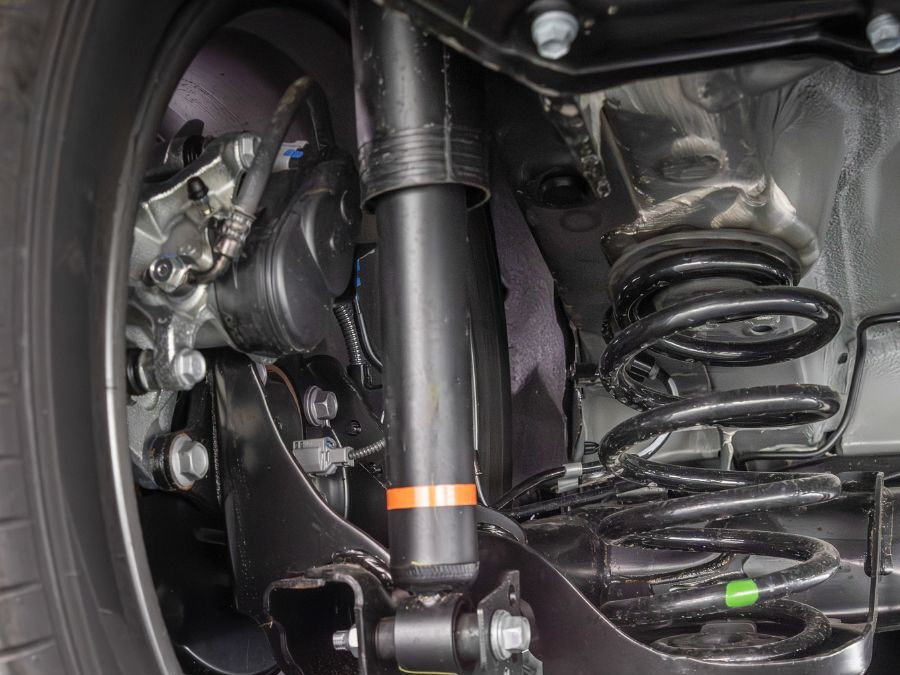
Your car hits a dip on Lakeway and keeps bouncing longer than it used to. The front end dives when you brake. Maybe the steering feels less planted on I-5, or your tires are developing an uneven wear pattern you can’t explain.
Those changes are easy to dismiss because shocks and struts usually wear gradually.
However, your suspension does much more than make the ride comfortable. It helps keep the tires in contact with the road, controls body movement, supports predictable steering, and keeps the vehicle stable while braking and cornering.
If your vehicle feels noticeably different than it did a year or two ago, it may be time to consider shock and strut replacement in Bellingham.
Schedule Your Suspension Inspection in Bellingham
If your car is bouncing, pulling, clunking, nose-diving, or simply doesn’t feel as controlled as it used to, Bruce Cox Auto Service & Repair can inspect the suspension and determine what’s actually worn.
Not every rough ride means you automatically need four new struts.
Diagnosis comes first.
What Do Shocks and Struts Actually Do?
Shocks and struts both help control suspension movement, but they aren’t necessarily the same component.
When your vehicle travels over a bump, the springs allow the wheels and body to move. Without something controlling that movement, the vehicle would continue bouncing after the road surface had already leveled out.
Shocks and struts damp that movement.
They help control:
- Body bounce
- Weight transfer
- Cornering movement
- Brake dive
- Tire contact with the road
- Suspension response after bumps
- Overall ride stability
A strut is typically a structural part of the suspension assembly and may also support the spring and help locate the wheel.
A shock absorber generally controls suspension movement without serving as the same type of structural suspension member.
Your vehicle may use struts in front, shocks in the rear, struts at all four corners, or another suspension design entirely.
That’s why the repair should start by identifying what the vehicle actually uses.
Bruce Cox provides complete suspension repair and service in Bellingham for drivers experiencing changes in ride quality, steering, handling, and tire wear.
Signs Your Shocks or Struts May Be Worn
Suspension wear doesn’t always announce itself with a dramatic failure.
Often, the vehicle gradually feels less controlled.
Because the change happens over thousands of miles, you may not immediately realize how much the ride has changed.
Here are some of the most common signs worth investigating.
Your Car Keeps Bouncing After a Bump
A healthy suspension should settle the vehicle quickly after a bump.
If the body continues bouncing several times after crossing a dip, speed bump, or uneven section of pavement, the shocks or struts may not be controlling suspension movement effectively.
You might notice this most clearly on residential streets, rough pavement, or freeway expansion joints.
The Front End Dives When You Brake
When you brake, the vehicle’s weight naturally transfers forward.
However, worn suspension components can allow excessive front-end movement.
The hood may visibly dip downward, or the vehicle may feel like it pitches forward much more dramatically than it once did.
Bruce Cox’s suspension service information specifically identifies nose-diving while stopping as a potential sign of suspension trouble. (brucecoximports.com)
The Car Feels Unstable in Corners
A vehicle shouldn’t feel as though the body is floating independently from the wheels underneath it.
If cornering suddenly feels less controlled, you notice excessive body lean, or the car takes longer to settle after changing direction, the suspension deserves attention.
This can be especially noticeable on curved roads outside Bellingham or during highway lane changes.
Your Tires Are Wearing Unevenly
Tire wear can provide clues about what is happening elsewhere in the vehicle.
Worn shocks and struts may allow the tire to move more aggressively against the pavement instead of maintaining consistent contact.
However, uneven tire wear can also come from:
- Wheel alignment problems
- Incorrect tire pressure
- Worn control arm bushings
- Ball joint wear
- Steering problems
- Wheel bearing issues
- Tire balance problems
Therefore, don’t assume unusual tread automatically means the struts are bad.
Bruce Cox’s tire and alignment service in Bellingham evaluates tire wear alongside alignment and suspension condition rather than treating these systems as unrelated.
You Hear Clunking Over Bumps
Clunking doesn’t automatically mean the shock absorber itself has failed.
Suspension systems contain many components that can create noise, including:
- Strut mounts
- Sway bar links
- Control arm bushings
- Ball joints
- Tie rods
- Springs
- Shock or strut mounting hardware
- CV joints
- Wheel bearings
The location and timing of the noise can provide useful clues.
Still, a proper inspection is far more reliable than replacing parts based on sound alone.
The Vehicle Pulls or Wanders
A vehicle that doesn’t feel stable in a straight line may have a suspension, steering, tire, or alignment concern.
Bruce Cox lists drifting during turns and steering difficulty among the warning signs that suspension service may be needed. (brucecoximports.com)
If the steering has changed, inspect the complete system before assuming an alignment will solve everything.
Leaking Shocks and Struts: Is Some Fluid Normal?
Shocks and struts commonly use hydraulic fluid to control movement.
If a seal fails, fluid may begin leaking from the component.
However, there’s an important difference between a light film and an active leak.
A technician can inspect the component to determine whether the condition is normal seepage or evidence that the shock or strut is losing fluid and performance.
This is another situation where a visual inspection matters more than a generic rule from the internet.
How Long Do Shocks and Struts Last?
There isn’t one mileage where every shock or strut automatically needs replacement.
The lifespan depends on:
- Vehicle design
- Component quality
- Road conditions
- Mileage
- Driving habits
- Vehicle load
- Previous suspension repairs
- Pothole and impact exposure
- Mountain or rough-road driving
A vehicle with 70,000 highway miles may have a very different suspension history than one with the same mileage spent regularly driving rough roads.
Therefore, mileage should be treated as context, not a diagnosis.
Bellingham Roads Can Make Suspension Wear Easier to Notice
Bellingham drivers encounter a surprisingly broad range of road conditions.
Your suspension might deal with smooth highway pavement in the morning and broken residential pavement, steep driveway approaches, gravel, potholes, or mountain roads later that day.
Wet Roads Increase the Importance of Tire Contact
A suspension component doesn’t create traction by itself.
Your tires do.
However, the suspension helps keep those tires connected to the road as the vehicle travels over uneven surfaces.
That’s particularly important in Bellingham’s wet climate.
Good tires still need a suspension system capable of controlling the wheel properly.
Potholes and Rough Pavement Add Impact Loads
One pothole isn’t guaranteed to destroy a strut.
Repeated impacts, however, contribute to cumulative suspension wear.
Those impacts also affect wheels, tires, alignment, bushings, ball joints, and steering components.
Mountain Trips Change the Demands on the Vehicle
A car regularly driven toward Mount Baker experiences more elevation change, curves, braking, and changing road surfaces than one used only for short trips through downtown Bellingham.
That doesn’t automatically mean suspension components will fail early.
It does mean actual vehicle use should be part of the maintenance conversation.
Our broader car maintenance checklist for Bellingham drivers explains why mileage, age, road conditions, and driving patterns should all factor into vehicle maintenance.
Do Shocks and Struts Need to Be Replaced in Pairs?
Often, replacing shocks or struts in axle pairs makes sense because the components on the same axle have generally experienced similar mileage and road conditions.
Replacing only one heavily worn component while leaving another similarly aged component on the opposite side may produce uneven suspension behavior.
However, the correct repair still depends on:
- Vehicle design
- Failure type
- Condition of the opposite component
- Manufacturer guidance
- Previous repairs
This is another reason Bruce Cox doesn’t treat every suspension repair as a predetermined package.
Inspect first.
Then decide what actually needs replacement.
Should You Replace All Four Shocks or Struts at Once?
Not necessarily.
Some vehicles may have worn components at both ends.
Others may only need service on one axle.
For example, the front struts may have significantly more wear while the rear shocks are still performing correctly.
Replacing all four components can make sense in some situations, particularly when they are similarly aged and worn.
However, there is no benefit in automatically replacing usable parts simply because another component failed.
The recommendation should reflect the vehicle’s condition.
Can Bad Shocks or Struts Cause Uneven Tire Wear?
They can contribute.
If suspension movement isn’t properly controlled, the tire may not maintain consistent contact with the road.
Over time, this can contribute to irregular wear patterns.
However, tire wear needs to be considered alongside:
- Alignment
- Tire pressure
- Rotation history
- Bushings
- Ball joints
- Wheel bearings
- Steering components
- Tire condition
If your tires are cupping, feathering, or wearing unevenly, don’t just replace the tires and hope the pattern disappears.
Bruce Cox’s Bellingham tire service guide explains how abnormal tread wear can reveal alignment or suspension problems that should be addressed alongside the tires.
Does Replacing Struts Require an Alignment?
In many suspension designs, replacing struts can affect wheel alignment.
An alignment check may therefore be appropriate after the repair.
However, the exact requirement depends on the vehicle and suspension design.
The bigger point is that shocks, struts, tires, and alignment don’t operate independently.
If worn suspension components are allowing excessive movement, aligning the vehicle before correcting the mechanical wear may not solve the underlying problem.
A good suspension repair looks at the complete system.
How Much Does Shock and Strut Replacement Cost in Bellingham?
The cost of shock and strut replacement in Bellingham depends heavily on the vehicle.
Factors include:
- Vehicle make and model
- Front or rear suspension design
- Shock versus strut configuration
- Parts required
- Labor access
- Strut mount condition
- Springs and related hardware
- Alignment requirements
- Additional worn suspension components
A front strut replacement on one vehicle can involve a very different process than rear shock replacement on another.
That’s why generic online price ranges often aren’t particularly useful.
The first step is determining what is actually worn.
Once the suspension has been inspected, Bruce Cox can provide a repair recommendation based on the specific vehicle rather than an internet average.
Rough Ride, Clunking, or Uneven Tire Wear? Have the Suspension Checked
If your car has started feeling different, schedule a suspension inspection with Bruce Cox Auto Service & Repair.
We’ll look beyond the shocks and struts themselves to determine whether the symptom is coming from the suspension, steering, tires, wheel bearings, alignment, or another component.
Can Worn Shocks and Struts Affect Braking?
Your brakes create the stopping force, but your suspension influences how the vehicle responds as weight transfers forward.
Worn shocks or struts can allow excessive body movement during braking.
You may notice:
- More pronounced nose dive
- Less settled vehicle movement
- Reduced confidence during hard stops
- Excessive bouncing after braking over uneven pavement
However, if you’re experiencing brake vibration, pedal pulsation, grinding, or a major change in stopping performance, inspect the braking system itself rather than assuming suspension wear is responsible.
Suspension and brake symptoms can overlap.
Proper diagnosis separates them.
What Else Can Feel Like Bad Shocks or Struts?
This is one of the most important parts of suspension diagnosis.
Several problems can produce symptoms that drivers describe as “bad struts.”
Worn Sway Bar Links
Sway bar links can create clunking over bumps.
Control Arm Bushings
Worn bushings may allow excessive suspension movement, steering changes, or noise.
Ball Joints
Ball joints allow suspension movement while helping locate the wheel.
Wear can create looseness, noise, and changes in steering feel.
Wheel Bearings
A worn wheel bearing may create humming, vibration, or looseness.
CV Axles
CV joints can create clicking while turning or vibration during acceleration.
For Subaru owners in particular, our guide to Subaru CV axle warning signs explains how axle, wheel-bearing, brake, and suspension symptoms can sometimes overlap.
Tires and Wheels
Bent wheels, damaged tires, balance problems, and abnormal tread wear can all create vibration or poor ride quality.
This is why replacing suspension parts based on symptoms alone isn’t ideal.
Suspension Inspection Before Replacement
A thorough suspension inspection may include checking:
- Shock and strut condition
- Fluid leakage
- Strut mounts
- Springs
- Control arms
- Bushings
- Ball joints
- Tie rods
- Sway bar links
- Wheel bearings
- CV boots and axles
- Tire wear
- Wheel condition
- Ride height
- Steering play
The technician may also road-test the vehicle to reproduce the concern.
That matters because a stationary inspection doesn’t always tell the entire story.
Bruce Cox takes the same diagnosis-first approach across its broader auto repair services in Bellingham: identify the actual source of the problem before recommending replacement parts.
Can I Keep Driving With Worn Shocks or Struts?
That depends on how worn they are and whether another suspension component is involved.
Gradual loss of damping may initially feel like nothing more than a rough or floaty ride.
However, severe wear, damaged mounting components, broken springs, steering problems, or looseness elsewhere in the suspension deserves more immediate attention.
Schedule an inspection sooner if you notice:
- Major steering changes
- Severe bouncing
- Significant vehicle lean
- Loud clunking
- One corner sitting lower
- Uneven or rapidly worsening tire wear
- Loose steering
- Fluid actively leaking from a shock or strut
- Vehicle instability
- Suspension components visibly damaged
If the vehicle feels unsafe to control, don’t continue driving it simply because the engine still runs.
Shock and Strut Replacement for Bellingham Drivers
Suspension components wear gradually, which makes them easy to overlook.
- You adapt to the extra bounce.
- You get used to the clunk.
- You assume the steering has always felt that loose.
Then you drive the vehicle after the correct repairs have been made and realize how much had changed.
Bruce Cox Auto Service & Repair has served Bellingham drivers since 1995 and provides complete suspension diagnostics and repair for vehicles throughout Bellingham and Whatcom County.
Whether you’re commuting on I-5, navigating downtown streets, driving from Ferndale or Lynden, or regularly heading toward the mountains, your suspension should keep the vehicle controlled and predictable.
Schedule Shock or Strut Service in Bellingham Today
If your vehicle is bouncing, nose-diving, clunking, wearing tires unevenly, or simply doesn’t feel as planted as it once did, schedule an inspection with Bruce Cox Auto Service & Repair.
We’ll inspect the suspension, explain what we find, and help determine whether you need shocks, struts, another suspension repair, or simply something that should be monitored.
Shock and Strut Replacement FAQ
How do I know if my shocks or struts need replacement?
Common signs include excessive bouncing, nose-diving during braking, increased body movement in corners, uneven tire wear, fluid leakage, clunking, or a noticeable decline in ride control. Because other suspension and tire problems can produce similar symptoms, an inspection should confirm the cause before replacement.
How long do shocks and struts usually last?
There is no universal replacement mileage for every vehicle. Lifespan depends on the vehicle, suspension design, mileage, road conditions, driving habits, vehicle loads, and component quality. Condition and performance are more useful than replacing shocks or struts based only on odometer mileage.
Should shocks and struts be replaced in pairs?
Replacing shocks or struts in axle pairs is often recommended because components on the same axle experience similar mileage and road conditions. However, the correct repair depends on the vehicle, manufacturer recommendations, and condition of the opposite component.
Do I need an alignment after replacing struts?
Strut replacement can affect alignment on many vehicles, so an alignment check may be appropriate after service. The exact requirement depends on the suspension design and repair performed.
Where can I get shock and strut replacement in Bellingham?
Bruce Cox Auto Service & Repair provides suspension inspections, shock and strut replacement, alignment, and related suspension repair in Bellingham, WA. The team can diagnose the source of bouncing, clunking, steering changes, and uneven tire wear before recommending repairs.