 1831 N State St

Your car starts normally in the morning, but by the end of the day the headlights seem dim. A battery warning light appears on the dash. Maybe you jump-start the vehicle, drive for a while, and then discover it won’t start again.
It’s easy to blame the battery.
Sometimes, though, the battery isn’t the real problem.
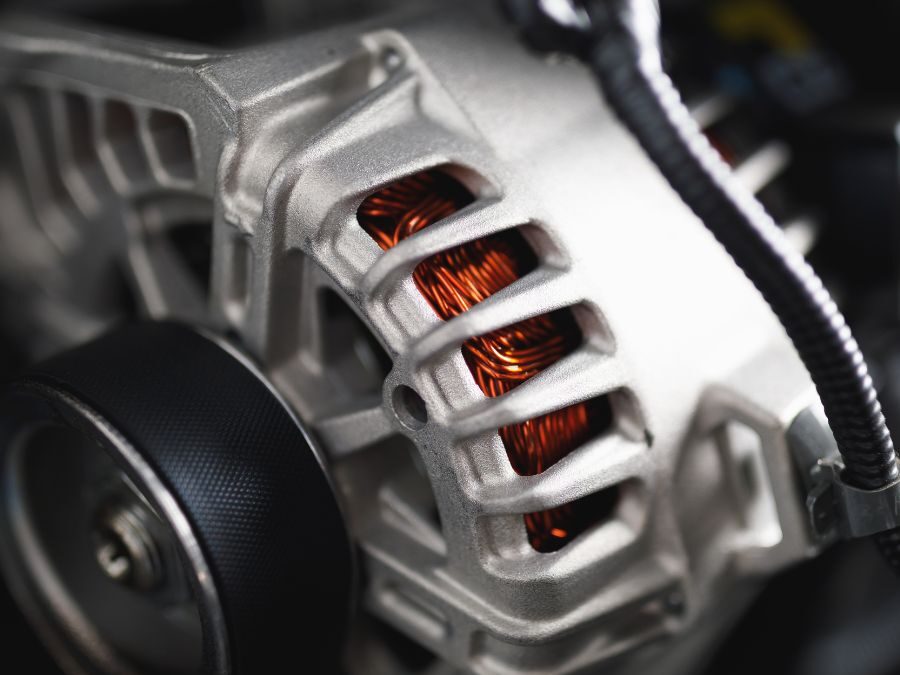
Your alternator is responsible for supplying electrical power while the engine is running and helping recharge the battery after startup. When the charging system begins to fail, the symptoms can look a lot like a weak battery.
That makes proper diagnosis especially important before moving forward with an alternator replacement.
Schedule Your Charging System Inspection in Bellingham
If your battery keeps dying, a warning light has appeared, or your vehicle is developing electrical problems, Bruce Cox Auto Service & Repair can test the starting and charging system before replacing parts.
What Does an Alternator Do?
Once your engine is running, the alternator helps provide electricity for systems throughout the vehicle while recharging the battery.
That includes power for things such as:
- Headlights
- Dashboard electronics
- Climate controls
- Engine-management systems
- Heated seats
- Wipers
- Infotainment systems
- Safety systems
- Other electrical accessories
Modern vehicles can place substantial demand on the charging system.
If alternator output becomes too weak, the battery may begin supplying more of that electrical load than it should. Eventually, the battery becomes discharged and the vehicle may shut down or refuse to restart.
For a broader look at charging, starting, and wiring problems, Bruce Cox provides auto electrical repair in Bellingham.
Common Signs You May Need Alternator Replacement
A failing alternator can create several symptoms, but none of them automatically proves the alternator itself has failed.
Battery Warning Light
The battery-shaped warning light is commonly misunderstood.
It doesn’t necessarily mean, “Replace the battery.”
Instead, it often indicates that the vehicle has detected a charging-system problem.
Possible causes can include:
- Weak alternator output
- Wiring problems
- Poor electrical connections
- Belt problems
- Battery condition
- Charging-system control faults
That’s why testing should come before alternator replacement.
Your Battery Keeps Dying
A battery that repeatedly goes dead may be failing.
It may also be perfectly capable of holding a charge but isn’t receiving enough energy from the alternator while you drive.
Other possibilities include electrical draws, poor connections, or repeated short trips that don’t give the charging system enough time to restore the battery.
Our guide on why your car battery keeps dying explains why replacing the battery isn’t always the complete solution.
Dim or Flickering Lights
Headlights or interior lights that noticeably change brightness can point toward inconsistent electrical voltage.
You might notice:
- Headlights dimming at idle
- Lights getting brighter as engine speed increases
- Dashboard lights flickering
- Interior lighting behaving inconsistently
Electrical symptoms like these deserve testing because batteries, alternators, wiring, grounds, and other components can all affect voltage.
Slow or Difficult Starting
A weak charging system can leave the battery undercharged.
That can produce:
- Slow cranking
- Clicking when starting
- Intermittent no-starts
- A vehicle that starts after a jump but won’t restart later
However, starting problems may also involve the battery or starter.
The symptom tells you where to begin looking, not which part to replace.
Electrical Accessories Behave Strangely
Modern vehicles depend heavily on stable voltage.
When charging-system voltage becomes abnormal, you may notice seemingly unrelated electrical behavior, such as:
- Power windows slowing down
- Infotainment resetting
- Dashboard warnings
- Climate controls acting inconsistently
- Electronics cutting in and out
A charging-system test can help determine whether these issues share a common cause.
Alternator vs. Battery: How Do You Know Which One Is Bad?
This is one of the most common questions drivers ask.
Unfortunately, symptoms alone aren’t always enough to tell.
A weak battery can make a healthy alternator appear to be struggling. Meanwhile, a failing alternator can repeatedly discharge a perfectly good battery.
In some cases, both components can be affected.
For example, repeatedly operating with a weak charging system can leave the battery deeply discharged. Over time, that can shorten battery life.
A proper diagnosis may include checking:
- Battery state of charge
- Battery condition
- Alternator output
- Charging voltage
- Cable condition
- Terminal connections
- Electrical grounds
- Drive belt condition
- Parasitic electrical draw when appropriate
Bruce Cox’s broader car maintenance checklist for Bellingham drivers also explains why the battery, alternator, starter, cables, terminals, and grounds should be considered together when diagnosing starting and charging problems.
Can a Bad Alternator Leave You Stranded?
Yes.
A vehicle with a failing alternator may continue running for a while because the battery can temporarily supply electricity.
But the battery has a limited amount of stored energy.
Once that energy drops too far, essential electrical systems may stop functioning and the engine can shut off.
That’s why a charging-system warning shouldn’t be treated like a reminder you can ignore indefinitely.
If the battery light appears while driving and is accompanied by multiple electrical warnings, dimming lights, power loss, or unusual steering behavior, getting the vehicle inspected promptly is a good idea.
Why Bellingham Driving Can Be Hard on a Charging System
Pacific Northwest driving doesn’t automatically cause alternators to fail, but local conditions can expose a weak electrical system.
Think about a typical Bellingham winter commute.
Your vehicle may be running:
- Headlights
- Windshield wipers
- Defrosters
- Cabin heat
- Heated seats
- Charging accessories
At the same time, short trips around town may provide less driving time for the alternator to restore the energy used during startup.
Cold weather can also expose a battery that already has reduced capacity.
The result is that a marginal battery or charging-system problem may become much more noticeable during darker, colder, wetter months.
Does a Battery Warning Light Mean I Need an Alternator?
Not necessarily.
This is exactly where unnecessary repairs happen.
The warning light tells you that the charging system needs attention. It doesn’t always identify the failed part.
Before replacing an alternator, the technician should consider possible issues such as:
- Loose or damaged wiring
- Poor battery connections
- Belt or tensioner problems
- Battery failure
- Control-module problems
- Ground problems
- Charging-system faults
Bruce Cox takes the same diagnostic-first approach across its automotive repair services in Bellingham: confirm the cause first, then recommend the appropriate repair.
Can You Drive With a Bad Alternator?
Sometimes a vehicle with a weakening alternator will continue driving temporarily.
That doesn’t mean it’s reliable.
Once the alternator stops providing adequate power, the vehicle begins relying more heavily on the battery.
Eventually, the battery can become too discharged to keep the engine and essential electronics operating.
If you suspect charging-system failure, it’s better to have the vehicle tested before you discover exactly how long it can run without a functioning alternator.
Battery Light On or Car Keeps Dying?
If you’re repeatedly jump-starting your vehicle or noticing charging-system symptoms, schedule an electrical inspection with Bruce Cox Auto Service & Repair.
We’ll test the system and determine whether the problem is the alternator, battery, wiring, starter, or another electrical component.
What Happens During Alternator Replacement?
Once testing confirms that the alternator has failed, replacement typically involves removing the old unit, installing the correct replacement, and verifying the charging system afterward.
Depending on the vehicle, technicians may also need to inspect or address:
- Drive belt condition
- Belt tensioner
- Battery condition
- Electrical connections
- Charging-system wiring
- Related fault codes
Access also varies significantly between vehicles.
On some cars, the alternator is relatively easy to reach. On others, surrounding components must be removed before the alternator can be accessed.
That’s one reason alternator replacement costs can vary widely between makes and models.
How Long Does an Alternator Last?
There is no exact mileage where every alternator fails.
Alternator life depends on factors including:
- Vehicle design
- Mileage
- Electrical demand
- Heat exposure
- Bearing condition
- Belt condition
- Charging-system health
- Individual component quality
Instead of replacing an alternator based on mileage alone, pay attention to symptoms and test the charging system when something changes.
Alternator Replacement in Bellingham
A dead battery doesn’t always mean you need a new battery.
Likewise, a battery warning light doesn’t automatically mean you need an alternator.
The best first step is proving what’s wrong.
Bruce Cox Auto Service & Repair has served Bellingham drivers since 1995 and provides electrical diagnostics and repairs for import and domestic vehicles.
Whether your car is slow to start on a cold Bellingham morning, losing electrical power on I-5, or repeatedly needing a jump in your driveway, we’ll test the charging system and identify the source of the problem.
Schedule Alternator Service in Bellingham Today
If your battery warning light is on, your lights are flickering, or your car keeps dying, schedule an appointment with Bruce Cox Auto Service & Repair.
We’ll determine whether you actually need an alternator replacement and help get your vehicle’s electrical system working reliably again.
Alternator Replacement FAQ
What are the most common signs of a bad alternator?
Common signs include a battery warning light, repeated dead batteries, dim or flickering lights, slow starting, electrical accessories behaving inconsistently, and a vehicle that loses electrical power while driving.
How do I know if my battery or alternator is bad?
Battery and alternator problems can create similar symptoms. Testing the battery and charging system is the most reliable way to determine whether the battery has failed, the alternator isn’t producing adequate output, or another electrical problem is involved.
Can I drive with a bad alternator?
A vehicle may continue driving temporarily on stored battery power, but it can eventually shut down once the battery becomes discharged. If charging-system problems are suspected, schedule an inspection rather than relying on the vehicle to continue running.
Where can I get alternator replacement in Bellingham?
Bruce Cox Auto Service & Repair provides battery, alternator, starter, and electrical-system testing and repair in Bellingham, WA. The charging system can be tested before alternator replacement is recommended.