 1831 N State St

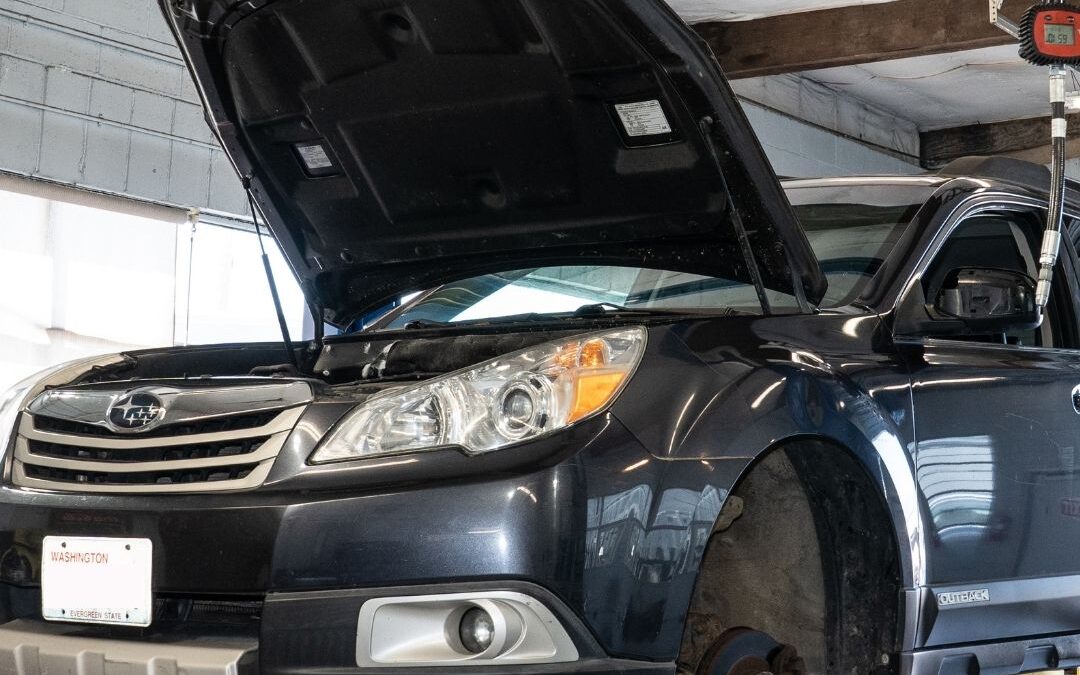
A clicking noise appears while turning into a parking space. You may also notice grease near a wheel or vibration during acceleration.
These symptoms can point toward a worn CV joint, damaged boot, wheel bearing, or another drivetrain problem. Proper diagnosis should come before recommending a Subaru CV axle replacement.
At Bruce Cox Imports, we inspect the axle, wheel bearing, brakes, and suspension before replacing parts. That helps us distinguish an axle problem from several concerns that can feel similar.
Schedule a Subaru drivetrain inspection
What Does a Subaru CV Axle Do?
A CV axle transfers power from the transmission or differential to a driven wheel. “CV” stands for constant velocity.
Each axle has joints that allow it to operate while the suspension moves. Front CV joints must also accommodate changes in steering angle.
Flexible rubber boots cover the joints and contain specialized grease. Those boots also keep water, grit, and road debris away from the joint surfaces.
When a boot splits, grease escapes and contamination enters. The joint can then wear until it develops clicking, vibration, or excessive movement.
A CV axle is not the same as a driveshaft. The driveshaft carries power between major drivetrain assemblies, while CV axles connect the drivetrain to individual wheels.
Why Subaru CV Axles Wear in Bellingham Conditions
Sharp Turns Load the Outer CV Joints
Outer CV joints operate at greater angles while the wheels are turned. Applying power during a sharp turn places additional load on those joints.
A worn outer joint often clicks during low-speed turns. The noise may become more noticeable while accelerating through a tight circle.
Parking lots and steep residential streets provide plenty of opportunities for this symptom to appear. Still, clicking does not confirm the axle without inspection.
Rough Roads Stress Axles and Suspension Parts
Potholes and rough trailhead roads make the suspension travel through a wider range of motion. Lifted or modified Subarus may also operate their axles at different angles.
That movement does not automatically damage an axle. However, an aging boot may crack as it repeatedly flexes.
A hard impact can also damage a wheel, bearing, control arm, or steering component. Those problems may create vibration or noise similar to axle wear.
Moisture Enters Through Damaged Boots
Bellingham’s wet roads expose the underside of your Subaru to constant spray. An intact CV boot protects the joint from that moisture.
Even a small split allows grease to escape. Water and grit can then enter as the axle rotates.
Catching a damaged boot early may provide more repair options. Once the joint becomes noisy or loose, complete axle replacement is often the more practical repair.
Shop Note: A torn boot and a worn CV joint are not always the same repair. Joint condition determines whether boot service still makes sense.
Signs Your Subaru May Need CV Axle Replacement
Clicking While Turning
Rhythmic clicking during a tight turn is a common outer CV-joint symptom. It may become louder when applying light throttle.
The side producing the noise is not always obvious from the driver’s seat. Sound can travel through the body and suspension.
We reproduce the concern carefully and inspect both sides before recommending an axle.
Vibration During Acceleration
A worn inner CV joint may create vibration or shudder under acceleration. The symptom may decrease when you release the throttle.
However, tires, wheels, engine mounts, wheel bearings, and driveline components can cause similar vibration. Vehicle speed and engine load help narrow the possibilities.
Replacing an axle without confirming the source may leave the original vibration unchanged.
Grease Around the Wheel or Suspension
A rotating axle can throw grease from a torn boot onto nearby components. You may see dark grease around the strut, control arm, splash shield, or inside the wheel.
Fresh grease does not always mean the joint has failed. The boot may have split recently or a clamp may have loosened.
Once the grease becomes gritty or the joint develops noise, internal wear is more likely.
Clunking When Changing Direction
Excessive movement in an inner or outer joint may create a clunk when shifting between drive and reverse. It may also occur when accelerating after coasting.
Worn engine mounts, transmission mounts, differential bushings, or suspension components can produce similar sounds.
The amount and location of movement must be inspected before blaming the axle.
A Damaged CV Boot
Cracks often begin between the folds of a CV boot. Those areas can be difficult to see with the Subaru sitting on the ground.
During an inspection, we look for splits, loose clamps, leaking grease, and contact with nearby components.
A boot that looks dry or cracked deserves attention before it opens completely.
Subaru CV Axle Replacement Versus Boot Repair
A torn boot does not automatically require a complete axle. Boot replacement may be reasonable when the joint remains clean, quiet, and undamaged.
The axle must usually be removed and disassembled for a thorough boot repair. The joint should be cleaned, inspected, repacked with the correct grease, and fitted with a quality boot.
That labor can approach the cost of replacing the complete axle. Parts quality and axle condition influence the decision.
Complete replacement generally makes more sense when:
- The joint clicks or clunks
- Vibration has been traced to the axle
- The joint has excessive movement
- Contaminated grease has entered the joint
- The boot has been open for an unknown period
- The shaft or joint housing is damaged
- Previous boot repairs have failed
We explain the condition and available options before recommending either approach.
The Bruce Cox Imports Subaru CV Axle Replacement Process
Our process begins with your description. We ask whether the noise occurs while turning, accelerating, coasting, or traveling at a certain speed.
Next, we road-test the Subaru when it is safe. We pay attention to steering angle, throttle position, vibration, and the location of the sound.
Our inspection may include:
- Examining the inner and outer CV boots
- Looking for escaped or contaminated grease
- Checking the joints for excessive movement
- Inspecting the axle shaft for damage
- Checking wheel bearings and hub condition
- Inspecting brakes, wheels, and tires
- Checking suspension and steering components
- Looking for leaks at the axle seals
- Inspecting drivetrain and engine mounts
- Confirming the repair with a road test
During replacement, the axle must seat correctly in the transmission or differential. Seals and retaining components also require careful inspection.
The axle nut must be tightened using the correct procedure and specification. Improper torque can affect the wheel bearing or create additional problems.
Some repairs disturb suspension components, while others do not. We recommend an alignment only when the repair procedure or existing wear makes it appropriate.
Have your Subaru’s clicking or vibration diagnosed
Could the Noise Come From the Brakes or Wheel Bearing?
Yes. Several nearby components can imitate an axle problem.
A worn wheel bearing often produces humming or growling that changes with road speed. The sound may also change as the vehicle turns and weight shifts.
Brake rotor concerns more often create vibration while braking. A loose backing plate, rust ridge, or trapped stone may cause scraping.
Worn suspension parts can create clunks while turning or changing direction. Tires and wheels may produce vibration at certain speeds.
That is why we inspect related systems before replacing an axle. Our Subaru service process focuses on confirming which component caused the symptom.
If the vibration occurs mainly while braking, the vehicle may need a brake inspection instead.
The Quick Fix Filter
The cheapest axle is not always the least expensive repair. Poorly manufactured joints may create vibration, noise, or fitment problems immediately.
Some replacement axles also change the operating characteristics of the drivetrain. Correct dimensions, joint design, and manufacturing quality matter.
Replacing both axles automatically is not always necessary. If one side has failed and the other remains healthy, the repair may involve only the damaged side.
An axle replacement also does not fix every vibration. Tires, wheel balance, engine mounts, bearings, and driveline parts should remain part of the diagnosis.
Another mistake is ignoring a leaking axle seal. Installing the axle without addressing a damaged seal may allow transmission or differential fluid to escape.
Good Subaru repair requires more than fitting a new shaft. It requires verifying the cause and checking everything disturbed during the job.
What Bellingham Subaru Drivers Should Watch For
Schedule an inspection when you notice:
- Clicking during sharp turns
- Vibration that increases under acceleration
- Grease around a wheel or suspension component
- A visibly split CV boot
- Clunking when shifting between drive and reverse
- Shuddering while climbing a hill
- Scraping or knocking near a front wheel
- Fluid leaking where the axle enters the drivetrain
- New vibration after hitting a pothole
- Humming that changes with road speed
- Steering or handling changes
- Noise after recent axle or suspension work
A clicking sound may suggest a CV joint, but inspection confirms whether the axle or a nearby component needs repair.
When to Schedule Subaru Axle Service
Schedule Soon
Book an inspection for a torn boot, light clicking, grease leakage, or acceleration-related vibration. Early diagnosis may prevent additional joint wear or fluid loss.
CV boots can also be checked during scheduled maintenance.
Stop Driving and Call a Shop
Stop driving if the Subaru develops severe vibration, repeated banging, or a major fluid leak. A wheel that appears loose or sits at an unusual angle also requires immediate caution.
Arrange a tow when the vehicle does not accelerate, steer, or track safely.
Mention It at Your Next Maintenance Visit
Mention a faint click, small grease spot, or occasional vibration during your next appointment. Include details about speed, steering angle, and throttle position.
Those details help distinguish CV axle wear from tire, brake, bearing, and suspension concerns.
Schedule your Subaru axle inspection
Frequently Asked Questions
How do I know if my Subaru needs CV axle replacement?
Your Subaru may need CV axle replacement if it clicks during turns, vibrates under acceleration, or throws grease from a damaged boot. Wheel bearings, tires, brakes, and suspension parts can produce similar symptoms, so the axle should be inspected before replacement.
Can I drive my Subaru with a clicking CV axle?
A light click may allow cautious travel to a repair shop, but the joint can continue wearing. Avoid hard acceleration and unnecessary driving. Stop if the noise becomes severe, the vehicle vibrates heavily, or steering and acceleration no longer feel predictable.
How much does Subaru CV axle replacement cost in Bellingham?
Cost depends on the Subaru model, axle location, parts quality, and related repairs. Axle seals, wheel bearings, or damaged hardware may affect the total. A hands-on inspection confirms which component failed and provides the basis for an accurate estimate.
Schedule Subaru CV Axle Replacement in Bellingham
Clicking, grease leakage, and acceleration vibration deserve a complete inspection. The CV axle may be responsible, but brakes, wheel bearings, tires, and suspension parts must also be considered.
At Bruce Cox Imports, we diagnose the symptom before recommending parts. Schedule your Subaru inspection for clear answers and a repair designed around the actual cause.