 1831 N State St
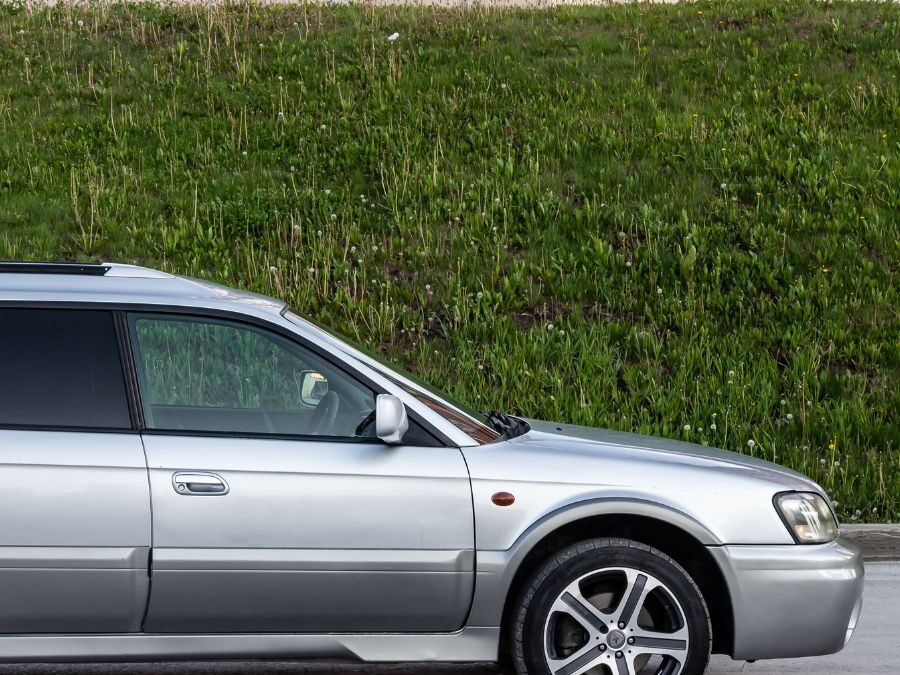
Hitting 60,000 miles in a Subaru feels like a milestone because it is one.
Your Outback, Forester, Crosstrek, Impreza, Legacy, Ascent, or WRX has already been through thousands of starts, stops, wet Bellingham mornings, freeway miles, and probably more than a few trips toward the mountains.
By this point, routine oil changes alone aren’t the whole maintenance picture.
A Subaru 60K service in Bellingham is an opportunity to look at the vehicle as a complete system, review its maintenance history, inspect important drivetrain and safety components, and determine what your specific Subaru needs for the next stretch of ownership.
Subaru maintenance requirements vary by model year, powertrain, transmission, and vehicle use. A proper 60K service should follow the requirements for your Subaru rather than a generic package built around a round number on the odometer.
Schedule Your Subaru 60K Service in Bellingham
Bruce Cox Auto Service & Repair provides Subaru service and scheduled maintenance in Bellingham using factory-grade equipment and a vehicle-specific approach.
We’ll look at your Subaru’s year, model, mileage, maintenance history, and condition to determine what is actually due.
Why Is 60,000 Miles Important for a Subaru?
Sixty thousand miles sits at an important point in a vehicle’s life.
Your Subaru isn’t necessarily “old” at 60K, but several systems have now accumulated enough use that inspections and scheduled maintenance become increasingly important.
Depending on your Subaru, the 60,000-mile area may involve attention to components such as:
- Engine oil and filter
- Tires
- Brake system
- Brake fluid
- Engine air filter
- Cabin air filter
- Drive belts
- Cooling system
- Steering and suspension
- Wheel bearings
- Axles and CV boots
- Transmission or CVT fluid
- Front and rear differential fluids
- Other model-specific maintenance items
Some of these may be due for replacement. Others may only require inspection.
Additionally, a service that has already been performed recently shouldn’t automatically be repeated simply because the odometer reached 60,000 miles.
That’s why maintenance history matters.
What Is Included in a Subaru 60K Service?
There isn’t one universal answer for every Subaru.
Subaru has changed maintenance requirements across model years, engines, transmissions, and vehicle platforms.
For example, the recommended action for transmission fluid or differential fluid at approximately 60,000 miles may differ depending on your model year and drivetrain.
Rather than giving every Subaru owner the same checklist, Bruce Cox looks at the actual vehicle.
That process may include reviewing:
- Manufacturer maintenance requirements
- Previous maintenance records
- Current mileage
- Vehicle age
- Engine and transmission configuration
- AWD drivetrain components
- Current fluid condition
- Brake and tire condition
- Any symptoms you’ve noticed
This approach helps separate services that are genuinely due from services that simply happen to appear on a generic “60K package.”
For a broader view of what should be monitored throughout the life of your vehicle, our Bellingham car maintenance checklist covers many of the systems worth watching between major service intervals.
Engine Oil and Filter Service
Oil changes remain fundamental even when your Subaru reaches a larger maintenance milestone.
Engine oil lubricates moving components, manages heat, helps control contamination, and plays an important role in modern engine systems.
However, the correct service interval and oil specification depend on the specific Subaru.
Turbocharged models also deserve particular attention to correct oil level, condition, and specification.
If your 60K service coincides with an oil-change interval, Bruce Cox provides oil change service in Bellingham using the appropriate oil and filtration for the vehicle.
More importantly, an oil service creates another opportunity to inspect the vehicle rather than simply draining the oil and sending it back out the door.
Subaru CVT and Transmission Inspection at 60K
This is one of the areas where generic Subaru maintenance advice can become misleading.
Many modern Subarus use continuously variable transmissions, while others use manual or conventional automatic transmissions.
The maintenance requirements aren’t identical.
Depending on model year and transmission, the manufacturer schedule may call for inspection or other service at particular mileage intervals.
A Subaru CVT also requires the correct fluid and procedures. This isn’t an area where “universal transmission fluid” should be treated as good enough.
If your Subaru is experiencing:
- Delayed engagement
- Shuddering
- Unusual RPM behavior
- Whining
- Hesitation
- Warning lights
- Fluid leakage
tell your technician before the service begins.
A symptom changes the conversation from routine maintenance to diagnosis.
Don’t Forget the Subaru AWD System
One of the biggest reasons drivers choose Subaru is all-wheel drive.
That system also means your vehicle has drivetrain components that deserve attention as mileage accumulates.
Front and rear differentials contain lubricants that protect gears and bearings under substantial loads.
Depending on the Subaru and model year, the maintenance schedule may specify inspection or service of these fluids at different intervals.
Condition also matters.
Leaks, contamination, unusual noises, previous maintenance history, and the way the vehicle is used can all influence what needs attention.
If your Subaru spends weekends heading toward Mount Baker, sees winter mountain driving, or regularly carries heavier loads, tell your mechanic.
That context is useful.
Brake Fluid and Brake System Inspection
Your brake pads aren’t the only parts of your braking system that age.
A complete brake inspection can include:
- Brake pad thickness
- Rotor condition
- Caliper operation
- Brake hoses and visible lines
- Brake fluid
- Parking brake operation
- Pedal feel
- Warning lights
- Signs of leakage
Brake fluid also absorbs moisture over time, which is one reason maintenance can be based on age as well as mileage.
That matters in Bellingham, where a vehicle may take several years to reach 60,000 miles.
A low-mileage Subaru isn’t automatically a maintenance-free Subaru.
Tires Matter Even More on an AWD Subaru
Tires play a particularly important role on an all-wheel-drive vehicle.
Correct pressure, adequate tread, proper rotation, and reasonably even tire wear help the vehicle perform as intended.
During a 60K service, tires should be inspected for:
- Remaining tread
- Uneven wear
- Cracking
- Damage
- Incorrect pressure
- Cupping
- Feathering
- Alignment-related wear
If one tire has significantly different wear than the others, don’t ignore it.
Maintaining a properly matched set of tires is especially important on an AWD vehicle.
Steering, Suspension, Wheel Bearings, and CV Boots
By 60,000 miles, your Subaru’s suspension has absorbed a lot of road.
Potholes, rough pavement, driveway entrances, gravel roads, and normal wear all add up.
A thorough inspection may look at components such as:
- Control arm bushings
- Ball joints
- Tie rods
- Struts and shocks
- Wheel bearings
- CV joints
- Axle boots
- Steering components
You may already have clues that something is changing.
Watch for:
- Clunking
- Clicking
- Steering vibration
- Uneven tire wear
- Wandering
- Pulling
- Humming that changes with vehicle speed
These symptoms shouldn’t simply be filed under “it’s a 60,000-mile car now.”
They should be diagnosed.
Does My Subaru Need Spark Plugs at 60,000 Miles?
Maybe, but don’t assume so based solely on a generic online checklist.
Spark plug replacement intervals have varied across Subaru model years and engines.
That’s exactly why we recommend looking up the maintenance requirements for the specific vehicle rather than copying a universal Subaru 60K checklist from the internet.
If spark plugs are due, replacing them at the proper interval can help preserve normal ignition performance.
If they aren’t due yet, there is no benefit in pretending they are simply to make the 60K service package larger.
What About Subaru Coolant?
Coolant is another maintenance item where the correct interval depends on the vehicle and coolant specification.
Cooling-system maintenance is important because coolant does more than prevent overheating. It also protects internal cooling-system components and helps control corrosion.
During service, technicians may inspect:
- Coolant level
- Hoses
- Connections
- Radiator
- Water pump area
- Visible leaks
- Cooling fans
- Reservoir condition
A dropping coolant level deserves an explanation.
Repeatedly topping off the reservoir without finding the cause isn’t maintenance.
Bellingham Driving Makes the Inspection Side of 60K Service Important
Subarus fit Whatcom County exceptionally well.
Unfortunately, the same conditions that make an Outback or Crosstrek useful around Bellingham also put different systems to work.
Rain and Moisture
Our wet climate can contribute to brake surface corrosion and exposes suspension and underbody components to persistent moisture.
Regular inspections help identify developing corrosion, damaged boots, and other issues before they become larger problems.
Trips Toward Mount Baker
Mountain driving adds elevation changes, colder temperatures, and longer braking events.
It can also place greater loads on the engine, transmission, cooling system, tires, and brakes than a short drive through downtown Bellingham.
Short Trips Around Town
Short commutes may add relatively few miles while still accumulating months and years.
That makes time-based maintenance especially important.
A Subaru that takes eight years to reach 60,000 miles doesn’t have the same maintenance story as one that reaches 60K in three years.
I-5 Commuting
Regular drives between Bellingham, Ferndale, Lynden-area connections, and other parts of Whatcom County create a different operating pattern.
Highway mileage can be relatively easy on some systems, but tires, fluids, wheel bearings, and drivetrain components still accumulate use.
Can an Independent Subaru Mechanic Perform 60K Service?
Yes, scheduled maintenance does not inherently require a dealership.
What matters is that the shop understands the vehicle, follows the correct maintenance requirements, uses appropriate fluids and parts, and documents the work performed.
Bruce Cox Auto Service & Repair has dedicated Subaru repair and maintenance services in Bellingham, with ASE-certified technicians and factory-grade equipment.
That means you can maintain your Subaru according to its actual needs without relying on a generic service package.
Subaru Nearing 60,000 Miles? Let’s Build the Right Service Plan
If the odometer is approaching 60K and you aren’t sure what has already been completed, that’s completely workable.
Schedule your Subaru 60K service with Bruce Cox Auto Service & Repair.
We’ll review the vehicle’s year, model, mileage, available maintenance history, and current condition to help determine what’s due now and what can wait.
What If I Bought My Subaru Used and Don’t Have Service Records?
This is common.
You find a great used Forester or Outback, but the glovebox doesn’t contain a neatly organized stack of maintenance records.
That doesn’t mean you need to replace every fluid and maintenance item immediately.
Start with the information you do have.
Available service records can be compared with the manufacturer schedule. Then the vehicle itself can be inspected.
From there, maintenance can be separated into practical categories:
- Confirmed complete
- Due now
- Due soon
- Condition-dependent
- Monitor for later
The goal is to create a baseline.
Once you know where the vehicle stands, future maintenance becomes much easier to plan.
Is Subaru 60K Service Worth It?
Think of the 60K service less as one enormous repair and more as a checkpoint.
You’re reviewing a vehicle that has already traveled 60,000 miles and asking:
What does it need to reliably travel the next 60,000?
Some Subarus will need several scheduled services at this point.
Others may have already had portions of the maintenance completed.
One vehicle may need brakes soon. Another may have nearly new brakes but require attention elsewhere.
A generic package can’t account for that.
A vehicle-specific inspection can.
Planning to Keep Your Subaru Past 100,000 Miles?
This is where 60K maintenance becomes especially valuable.
Subarus are often vehicles people keep.
A Forester that fits your family today may still be hauling gear around Whatcom County years from now. An Outback that’s already been to Baker dozens of times may have many more mountain trips ahead of it.
Getting from 60,000 to 100,000, 150,000, or 200,000 miles is easier when maintenance has continuity.
That means knowing:
- What was serviced
- When it was serviced
- What is due next
- Which components are wearing
- Which small concerns are developing
Long-term vehicle ownership works much better with a plan than with a series of surprises.
Subaru 60K Service for Bellingham and Whatcom County Drivers
Bruce Cox Auto Service & Repair has served Bellingham drivers since 1995.
Our Subaru maintenance approach isn’t built around selling the longest possible checklist.
It’s built around identifying what your specific Subaru needs.
Whether you drive an Outback, Forester, Crosstrek, Impreza, Legacy, Ascent, WRX, or another Subaru model, we’ll look at the manufacturer requirements, available service history, vehicle condition, and how you actually use the car.
Then we can help prioritize:
- What needs attention now.
- What is coming next.
- What can wait.
- What simply needs to be monitored.
Schedule Your Subaru 60K Service in Bellingham Today
If your Subaru is approaching or has recently passed 60,000 miles, schedule an appointment with Bruce Cox Auto Service & Repair.
We’ll help you understand exactly where your Subaru stands and build a maintenance plan designed for the miles ahead.