 1831 N State St


In a BMW, the serpentine belt is not merely a piece of rubber that turns your alternator. It is the connector for a high-tension system designed to operate at specific harmonic frequencies. When this system is perfectly aligned, your N52 or N55 engine delivers the silky-smooth power delivery that defines “The Ultimate Driving Machine.”
However, many owners wait for a “chirp” or a snap before addressing this issue. In the world of European performance, if you can hear the belt, the damage to your engine’s internal harmonics has already begun.
The Logic: The Science of Tension and Vibration
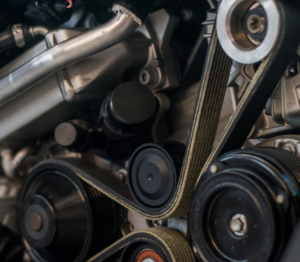 German engines operate under tighter tolerances than their domestic counterparts. The serpentine system is a “closed loop” of precision that relies on three specific factors:
-
Hydraulic Tensioning: Unlike simple spring-loaded tensioners, many BMWs use hydraulic dampers. When these lose their “rebound” rate, the belt vibrates at high RPMs, putting unnecessary lateral load on your water pump and alternator bearings.
-
The Overrunning Alternator Pulley (OAP): This is a one-way clutch on your alternator. It allows the alternator to “freewheel” when the engine slows down. If this pulley seizes—a common BMW ailment—it sends “kickback” through the belt, leading to premature failure.
-
Thermal Material Degradation: BMW engine bays run significantly hotter than most. This heat “vulcanizes” standard belts, making them brittle and prone to micro-cracking that is invisible to the naked eye but catastrophic under load.
The Bruce Cox European Standard
We don’t just “change a belt.” We perform a full system calibration. Our European technicians follow a strict protocol:
-
Harmonic Balancer Inspection: We check the crankshaft pulley (the harmonic balancer) for rubber separation. A wobbling balancer is the #1 cause of belt-shredding on high-mileage BMWs.
-
The “Clean-Room” Method: We use specialized solvent-free cleaners to ensure the pulleys are free of “belt glaze”—the microscopic layer of old rubber that causes new belts to slip and squeal.
-
Torque-to-Yield Verification: Many BMW accessory bolts are aluminum and “one-time use.” We replace and torque these to factory-spec to ensure they don’t snap under the high vibration of a performance engine.
The “Generalist” Filter: Why “Universal” Parts Fail Your BMW
Your local “all-makes” shop likely uses a universal belt from a local parts store. While it may fit, it often lacks the aramid-fiber reinforcement found in original Continental or Lemförder belts.
Generic belts stretch. On a BMW, a stretched belt means the alternator isn’t charging at peak efficiency and the water pump isn’t moving fluid at the precise rate required by the ECU. We use only OE (Original Equipment) components because your BMW was engineered as a system, not a collection of parts.
Maintain the precision you paid for.
If your BMW is approaching the 60,000-mile mark, your serpentine system is due for a professional calibration.
Schedule Your European Precision Audit at Bruce Cox Automotive