 1831 N State St


It is the most dreaded notification in the hybrid world. You’re driving down I-5, and suddenly your dashboard lights up like a Christmas tree with the message: “Check Hybrid System. Stop the vehicle in a safe place immediately.”
The immediate internal reaction is financial anxiety. Most owners assume the High-Voltage (HV) battery has died and that a $5,000 bill is imminent. Because of this “disposable” mentality, many owners sell their vehicles for parts or trade them in for a fraction of their value.
At Bruce Cox Automotive, we view this warning differently. To us, it isn’t a death sentence; it’s a data-point.
The Engineering Reality: It’s Rarely the “Whole Battery”
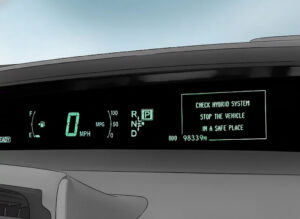 A hybrid vehicle is a complex ecosystem of thermal management, chemical storage, and high-voltage switching. When the “Check Hybrid System” light triggers, the car’s ECU has detected a value outside of its tight operating tolerance. Here are the three most common engineering failures that trigger this light:
-
Individual Module Delta: Your battery pack is made of 28 to 40 individual modules. The light often triggers because one single module has dropped 1.2 volts below the others. The system sees this “imbalance” and shuts down to protect the pack.
-
Thermal Inefficiency (Cooling Fan Clog): Hybrid batteries generate immense heat. If the intake fan (usually located under the rear seat) is clogged with pet hair or dust, the battery can’t “breathe.” The system triggers the light to prevent the battery from literally cooking itself.
-
Inverter Isolation Faults: Sometimes the issue isn’t the battery at all. It can be an electrical “leak” in the inverter or a failing water pump that cools the hybrid electronics.
The Bruce Cox Hybrid Protocol
Standard shops read a code and tell you to buy a new battery. Our protocol is built on surgical diagnostics:
-
Real-Time Stress Testing: We use specialized software to monitor the “internal resistance” of every single module while the car is under load. This tells us exactly which cell is failing, rather than guessing at the whole pack.
-
Voltage Balancing Analysis: We determine if the pack can be “reconditioned.” By deep-cycling the modules and re-balancing the voltages, we can often extend the life of an original battery for years at a fraction of the cost of a new one.
-
Bus Bar Corrosion Service: In the Pacific Northwest, moisture causes the copper “bus bars” connecting your battery modules to corrode. This creates resistance and triggers “Check Hybrid System” codes. We clean or replace these connectors to restore perfect electrical flow.
The “Generalist” Filter: Why Data Trumps Fear
Generic repair shops are often terrified of high-voltage systems. They lack the insulated tools and the specialized diagnostic subscriptions required to talk to a Toyota or Lexus Hybrid’s brain. Dealerships, on the other hand, are incentivized to sell you a new “OEM” battery because it’s a high-margin, low-labor task.
At Bruce Cox Automotive, we are growth-minded about your car’s longevity. We provide you with a Hybrid Health Report—a transparent look at your battery’s actual remaining capacity. We give you the data so you can make a logical decision based on ROI, not fear.
Your hybrid isn’t obsolete; it just needs a specialist.
If your warning light is on, don’t assume the worst. Bring your vehicle to the technicians who speak the language of high-voltage engineering.
Schedule Your Hybrid System Diagnostic Audit at Bruce Cox Automotive